

Mots-clés
thromboembolie
hémorragie
chirurgie cardiaque
Afrique Subsaharienne
Comment citer
Résumé
Introduction :
Les patients porteurs de prothèses valvulaires mécaniques (PVM) sous anticoagulation orale (AO) présentent un risque accru de complications hémorragiques et thromboemboliques. L'objectif de cette étude est d'analyser les caractéristiques cliniques et évolutives des patients ayant subi un remplacement valvulaire mécanique (RVM) avec des complications thromboemboliques (TE) ou hémorragiques sous AO.
Patients et méthodes :
Nous avons réalisé une étude descriptive et rétrospective entre novembre 2020 et décembre 2022 sur 6 patients présentant des complications thromboemboliques et hémorragiques, opérés pour RVM au Centre Cardiaque de Shisong. Les données cliniques, paracliniques et les résultats chirurgicaux ont été revus et une analyse statistique descriptive a été réalisée.
Résultats :
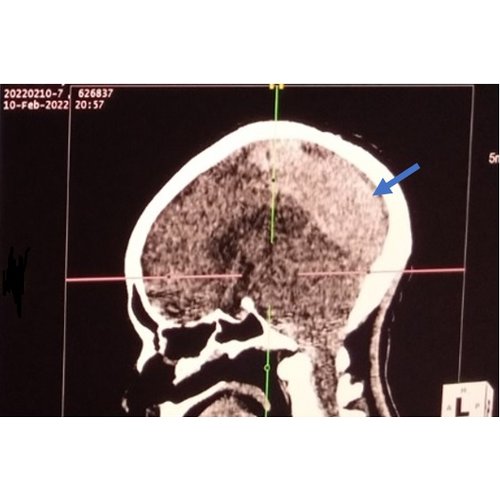
Au total, 39 patients ont subi un remplacement valvulaire mécanique durant la période d’étude. Parmi eux, 6 patients ont présenté une complication thromboembolique et/ou hémorragique, soit une fréquence de 15,4 %. L'âge médian au moment de la chirurgie était de 29 ans (IIQ 17-31). L'AO utilisé était l'acénocoumarol et la dose quotidienne médiane était de 4 mg (IIQ 3,3-4,0). La médiane du rapport international normalisé (INR) à la sortie était de 3,5 (IIQ 3,00-4,15). Le délai médian entre la sortie et la survenue de l'événement thromboembolique ou hémorragique était de 2,5 mois (IIQ 1,25-3,75). Un déficit neurologique et une altération de la conscience étaient les raisons d'admission aux urgences pour 100 % des cas. Des complications hémorragiques majeures et TE sont survenues respectivement chez 5 patients (83,3 %) et 1 patient (16,7 %). À l'admission, les valeurs d'INR collectées étaient supérieures aux plages cibles pour 5 (83,3 %) patients et ceux-ci sont décédés d'une hémorragie intracrânienne pendant l'hospitalisation.
Conclusion :
Cette étude montre un contrôle insuffisant de l'anticoagulation chez les jeunes patients porteurs de PVM dans un pays en développement. Améliorer la prise en charge des patients avec des valves mécaniques reste une préoccupation essentielle dans le suivi de ces derniers et est nécessaire pour réduire le fardeau des complications dans cette population.
Références
1. Organisation Mondiale de la Santé: La cardiopathie rhumatismale. CONSEIL EXÉCUTIF EB141/4 Cent quarante et unième session 1er mai 2017 Point 6.2 de l’ordre du jour provisoire. https://iris.who.int/bitstream/handle/10665/2 73670/B141_4_fr.pdf?sequence=1&isAllowed =y.
2. Dunning J, Gao H, Chambers J, Moat N, Murphy G, Pagano D, et al. Aortic valve surgery: Marked increases in volume and significant decreases in mechanical valve usean analysis of 41,227 patients over 5 years from the Society for Cardiothoracic Surgery in Great Britain and Ireland National database Acquired Cardiovascul. J Thorac Cardiovascular Surgery. 2011; 142:776–82.
3. Head SJ, Kappetein AP. Aortic valve replacement in younger adults: a biological valve is not the logical choice. European heart journal. 2016 Sep 7;37(34):2668-70.
4. Goldstone AB, Chiu P, Baiocchi M, Lingala B, Patrick WL, Fischbein MP, et al. Mechanical or Biologic Prostheses for Aortic-Valve and Mitral-Valve Replacement. N Engl J Med. 2017 Nov 11; 377(19):1847.
5. Hering D, Piper C, Bergemann R, Hillenbach C, Dahm M, Huth C, et al. Thromboembolic and bleeding complications following St. Jude Medical valve replacement: results of the German Experience With Low-Intensity Anticoagulation Study. Chest. 2005; 127(1):53–9.
6. Labaf A, Svensson PJ, Renlund H, Jeppsson A, Själander A. Incidence and risk factors for thromboembolism and major bleeding in patients with mechanical valve prosthesis: A nationwide population-based study. Am Heart J. 2016 Nov 1; 181:1–9.
7. Cannegieter SC, Rosendaal FR, Briët E. Thromboembolic and bleeding complications in patients with mechanical heart valve prostheses. Circulation. 1994; 89(2):635–41.
8. Schulman S, Kearon C. Definition of major bleeding in clinical investigations of antihemostatic medicinal products in nonsurgical patients. J Thromb Haemost. 2005 Apr; 3(4):692–4.
9. Huang JT, Chan YH, Wu VCC, Cheng YT, Chen DY, Lin CP, et al. Analysis of Anticoagulation Therapy and Anticoagulation-Related Outcomes Among Asian Patients After Mechanical Valve Replacement. JAMA Netw Open. 2022 Feb 1;5(2): e2146026.
10. Rusingiza EK, El-Khatib Z, Hedt-Gauthier B, Ngoga G, Dusabeyezu S, Tapela N, et al. Outcomes for patients with rheumatic heart disease after cardiac surgery followed at rural district hospitals in Rwanda. Heart. 2018;104(20):1707–13.
11. Hirsh J, Anand SS, Halperin JL, Fuster V. AHA Scientific Statement: Guide to anticoagulant therapy: heparin: a statement for healthcare professionals from the American Heart Association. Circulation . 2001;103:2995–3019.
12. Schulman S, Beyth RJ, Kearon C, Levine MN. Hemorrhagic complications of anticoagulant and thrombolytic treatment: American College of Chest Physicians Evidence-Based Clinical Practice Guidelines (8th Edition). Chest Journal. 2008 Jun;(6 Suppl):257S-298S.
13. Writing Committee Members, Otto CM, Nishimura RA, Bonow RO, Carabello BA, Erwin JP, et al. 2020 ACC/AHA Guideline for the Management of Patients With Valvular Heart Disease: Executive Summary: A Report of the American College of Cardiology/American Heart Association Joint Committee on Clinical Practice Guidelines. J Am Coll Cardiol. 2021 Feb 2; 77(4):450–500.
14. Levine MN, Hirsh J, Landefeld S, Raskob G. Hemorrhagic complications of anticoagulant treatment. Chest [Internet]. 1992 Oct 1; 102(4 SUPPL.):352S-363S. Available from: http://journal.chestnet.org/article/S001236921 5413327/fulltext
15. Stein PD, Alpert JS, Copeland J, Dalen JE, Goldman S, Turpie AGG. Antithrombotic Therapy in Patients With Mechanical and Biological Prosthetic Heart Valves. Chest. 1992 Oct 1;102(4):445S-455S.
16. Chan V, Jamieson WRE, Lam BK, Ruel M, Ling H, Fradet G, et al. Influence of the On-X mechanical prosthesis on intermediate-term major thromboembolism and hemorrhage: A prospective multicenter study. J Thorac Cardiovasc Surg. 2010;140(5):1053–8.
17. Hanslik T, Prinseau J. The use of vitamin K in patients on anticoagulant therapy: a practical guide. Am J Cardiovasc Drugs. 2004;4(1):43–55.
18. Huda SA, Kahlown S, Jilani MH, Chaudhuri D. Management of Life-Threatening Bleeding in Patients With Mechanical Heart Valves. Cureus. 2021;13(6):e15619.
19. Hart RG, Boop BS, Anderson DC. Oral Anticoagulants and Intracranial Hemorrhage. Facts and Hypotheses. Stroke. 1995 Aug 1;26(8):1471–7.
Métriques
Téléchargements

Ce travail est disponible sous la licence Creative Commons Attribution 4.0 International .
Merci de créditer les auteurs lors de toute citation : L Ngo Yon, C Mve Mvondo, H Tsague Kengni, Z Kobe, S M’baye Salissou, W Ngatchou Djomo, M Ngowe Ngowe (2026)