

Keywords
récidive
score GREAT
Côte d’Ivoire
How to Cite
Abstract
Introduction :
Recurrence of Graves' disease treated with synthetic antithyroid drugs is frequent. The identification and evaluation of recurrence risk markers are necessary to optimize management. The objective of this work was to study the factors of Graves' disease recurrence at the Yopougon University Hospital (CHU) in Côte d'Ivoire. Materials and Methods : This was an analytic study with retrospective data collection conducted from January 2002 to December 2018 (17 years), including 239 patients treated with synthetic antithyroid drugs for a first episode of Graves' disease. Socio-epidemiological, clinical, biological, therapeutic, and evaluative data were collected.
Results :
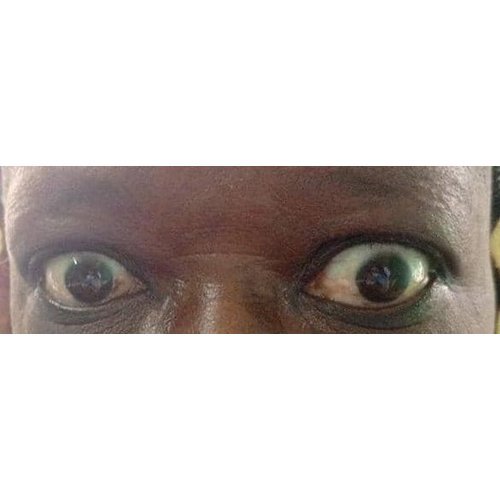
Out of 239 patients, 18.41% (n = 44) presented with a recurrence. The mean age was 32.6 ± 13 years, with a female predominance (72.72%; n = 32). The 16–30 age group was the most represented (52.27%; n = 23). Malignant exophthalmos was the only factor significantly associated with recurrence (p<0.05). The other factors studied were not significantly associated. The GREAT score proved to be poorly discriminatory in our study.
Conclusion :
The recurrence rate is 18.41%. Malignant exophthalmos was the only independent risk marker for recurrence found. The use of the GREAT score seems inapplicable in this context.
References
1. Lanzolla G, Marinò M, Menconi F. Graves disease: latest understanding of pathogenesis and treatment options. Nat Rev Endocrinol. 2024;20(11):647-60.
2. Hoang TD, Stocker DJ, Chou EL, Burch HB. 2022 Update on Clinical Management of Graves Disease and Thyroid Eye Disease. Endocrinol Metab Clin North Am. 2022;51(2):287-304.
3. Struja T, Fehlberg H, Kutz A, Brodmann Maeder M, Melmer A, Meier C, et al. Can we predict relapse in Graves’ disease? Results from a prospective multicenter study. Eur J Endocrinol. 2017;176(1):87-97.
4. Vos XG, Smit N, Endert E, Tijssen JG, Wiersinga WM. Pattern and predictors of recurrence of Graves' hyperthyroidism after antithyroid drug treatment. Eur J Endocrinol. 2016 May;174(5):653-62.
5. Philippe J. La maladie de Basedow. Rev Med Suisse. 2009;5(204):764-8.
6. Weetman AP. Graves’ disease. N Engl J Med. 2000;343(17):1236-48.
7. Sturny Z, Struja T, Cornelius J, Müller B, Schuetz P. Nouvel outil décisionnel dans le traitement de la maladie de Basedow. Rev Med Suisse. 2018;14(607):1014-8.
8. Tatishvili S, Buffet C. Nouvelles perspectives pour le diagnostic et le pronostic de la maladie de Basedow. Ann Endocrinol (Paris). 2018;79(Suppl 1):S31-9.
9. Ben Othman R, Yazidi M, Rejeb O, Chaker F, Chihaoui M, Slimene H, et al. Facteurs de risque de rechutes de la maladie de Basedow traitée par antithyroïdiens de synthèse. Ann Endocrinol (Paris). 2016;77(4):383-8.
10. Bouziane T, Larwanou MM, Elouahabi H. Facteurs prédictifs de rechute de la maladie de Basedow traitée par antithyroïdiens de synthèse : à propos de 72 cas. Ann Endocrinol (Paris). 2017;78(4):331-6.
11. Yao A, Ahoussi JB, Koffi D, Hue A, Danho J, Abodo J, et al. Aspects thérapeutiques et évolutifs de la maladie de Basedow à l’Hôpital Militaire d’Abidjan (Côte d’Ivoire). Health Sci Dis. 2020;21(3):71-6.
12. Abdelkerim M. Schéma « Block and Replace » dans la prise en charge de la maladie de Basedow au service d’endocrinologiediabétologie du CHU de Yopougon d’Abidjan [Mémoire de DES]. Abidjan : Université Félix Houphouët-Boigny; 2020.
13. Sana M. Maladie de Basedow : aspects épidémiologiques, cliniques, thérapeutiques et évolutifs [Thèse de médecine]. Dakar: Université Cheikh Anta Diop; 2015.
14. Diop S, Halim A, Leye A, Ka MM. Aspects psychoaffectifs et manifestations psychiatriques dans la maladie de Basedow : à propos de 104 cas au Sénégal. Rev CAMES Sante. 2011;12:62-4.
15. Coulet O, Kraemer P, Leyral G, Cloatre G. Prise en charge de la maladie de Basedow en milieu tropical : expérience du CHA Bouffard (Djibouti). Med Trop (Mars). 2004;64(2):192-4.
16. Wiersinga WM. Graves’ disease: can it be cured? Endocrinol Metab (Seoul). 2019;34(1):29-38.
17. Effraimidis G. Predictive scores in autoimmune thyroid disease: are they useful? Eur J Endocrinol. 2019;181(3):R125-36.
Metrics
Downloads

This work is licensed under a Creative Commons Attribution 4.0 International License.
Copyright (c) 2025 I Mato, A Yao, I Ousmane, H Moussa, R Mahaman Yacoubou Abdoul, S Ousmane, J Abodo