

Keywords
medical-surgical management
quality of life
Niamey
Niger
How to Cite
Abstract
Introduction :
Hidradenitis suppurativa (HS), also known as Verneuil's disease, is a chronic, suppurative inflammatory skin condition affecting the pilosebaceous follicles in the major skin folds. It significantly impacts patients' quality of life. Epidemiological data on this condition are limited in Africa. To date, no studies are available in Niger. The objective of this study is to describe the epidemiological, diagnostic and therapeutic aspects of Verneuil’s disease (hidradenitis suppurativa) in the Dermatology-Venereology Department of the National Hospital and the Dermatology and Leprosy Center of Niamey.
Materials and methods :
This was a retrospective, descriptive study conducted in two dermatological referral centers in Niamey: the Dermatology-Venereology Department of the National Hospital (May 17, 2003 to August 8, 2020) and the Boukoki Dermato-Leprosy Center (January 8, 2016 to August 15, 2020).
Results :
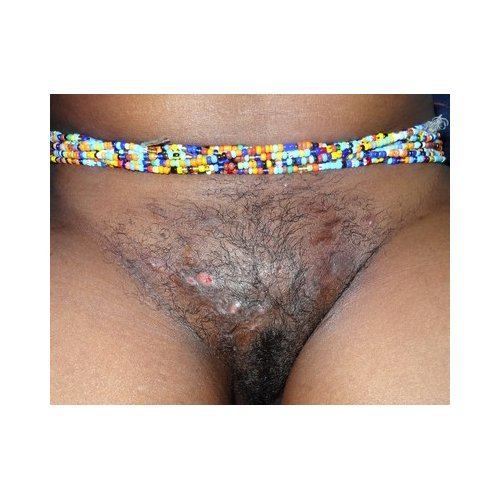
Out of a total of 38,720 consultations, 23 cases of hidradenitis suppurativa (HS) were diagnosed, representing a frequency of 0.056%. The majority of patients were under 30 years of age (39.1%). The mean age was 36.35 years, with a range of 20 to 63 years. Women represented 60.9% (n = 14), and the female-to-male ratio was 1.55. The age of onset was 25 years in 43.5% of cases. The average number of attacks per year was 2.3. Patients under 30 years of age constituted 39.1%. A family history was noted in 4.3%; risk/aggravating factors as well as comorbidities were also identified Abscessed and suppurating nodular lesions were the predominant presentation (82.60%). The locations were primarily axillary (69.10%) and inguino-femoral (26.10%). Treatment consisted of lifestyle and dietary modifications combined with local and systemic therapy (erythromycin combined with metronidazole). Remission lasting several months (6 to 12) was achieved after 12 weeks; however, a relapse was noted in 3 patients (13.04%) after a 12-week remission, necessitating surgical intervention.
Conclusion :
Hidradenitis suppurativa (HS) is a debilitating suppurative disease. In our experience, the combination of erythromycin and metronidazole resulted in prolonged remission in over 80% of patients after 12 weeks. This combination thus led to a significant improvement in quality of life.
References
1. Gulliver W, Zouboulis C.C., Prens E., Jemec G.B.E.,Tzellos T. Evidence-based approach to the treatment of hidradenitis suppurativa/acne inversa, based on the European guidelines for hidradenitis suppurativa. Rev Endocr Metab Disord (2016) 17 : 343 – 351.
2. Goldberg SR, Strober BE, Payette MJ. Hidradenitis suppurativa ; Epidemiolgy, clinical presentation, and pathogenesis. J Am Acad Dermatol.2020 May, 82 (5) : 1045-1058.
3. Loget J, et al. Errance médicale des patients atteints d’hidradénite suppurée : un problème majeur et persistant. Étude « RENS Verneuil ». Ann Dermatol Venereol (2018).
4. Pinter A, G. Kokolakis G, Rech J, Biermann MHC, Haberle BM., et al. Hidradenitis Suppurativa and Concurrent Psoriasis : Comparison of Epidemiology, Comorbidity Profiles, and Risk Factors. Dermatol Ther (Heidelb) (2020) 10 :7-16.
5. Miller IM, Mc Andrew RJ., Hamzavi I. Prevalence, Risk Factors, and Comorbidities of Hidradenitis Suppurativa. Dermatol Clin. 2016 Jan ; 34 (1) 7 –16.
6. Sachdeva M, Shah M, AlaviA. Race-Specifc Prevalence of Hidradenitis Suppurativa. J Cutan Med Surg. 2021 Mar-Apr ; 25(2) : 177-187.
7. Chu CB, Yan CC, Tsai SJ. Hidradenitis Suppurativa : disease pathophysiology and sex hormones. Chin J Physiol. 2021 NovDec ; 64(6) :257-265.
8. Hurley HJ. Axillary hyperhidrosis, apocrine bromhidrosis, hidradenitis suppurativa, and familial benign pemphigus. In: Roenigk HH Jr, Roenigk RK, eds. Dermatologic Surgery: Principles and Practice. New York, NY: Marcel Dekker; 1989:729-739.
9. Ngakani OS, Owono M JP, Aseke K.JA, Socaras P, Ondo N’dong JF, Ngakani offobo Silvere. Maladie de Verneuil : A propos de 11 cas au centre hospitalier régonal Amissa Bongo de Franceville et Revue de littérature. Int J Adv Res (IJAR).2021 ; 9(9) :563-8.
10. Belhabib Z, Krami HE, Errabih I, Daoudi FZ, Fadlouallah M, Benzoubeir N, et al. La maladie de Verneuil : A propos de 107 cas. Hegel. vol 3.N°1.2013.
11. Seyed JSM, Knüsela E, Cazzanigaa S, Hunger R.E. A Retrospective Cohort Study on Patients with Hidradenitis Suppurativa. Dermatology. 2018 ; 234 (1-2) : 71-78.
12. Parulkar I, Haleem H, Paek SY. Epidemiologic and clinical features of hidradenitis suppurativa. Semin Cutan Med Surg.2017 Jun ; 36(2) : 42-46.al.
13. Alikhan A, Sayed C, Alavi A, Alhusayen R, Brassards A, Burkhart C, et al. North American clinical management guidelines for hidradenitis suppurativa: A publication from the United States and Canadian Hidradenitis Suppurativa Foundations. Part I: Diagnosis, evaluation, and the use of complementary and procedural management. J Am Acad Dermatol. 2019 Jul; 81 (1) : 76-90.
14. Green M, Feschuk A, Kashetsky N, Maibabach H. (2023). Clinical characteristics and treatment outcomes of pityrosporom folliculitis in immunocompetant patients. Archives of dermatological research, 315(6), 1497-1509.
15. Salissou L, Adehossi E, Maman Laouali S, Mamoudou S, Nouhou H. Cutaneous Tuberculosis in Niger : A 9 year retrospective study. Our dermatol Online. 2015 ; 6(2) :153-156.
16. Bartell HL, Sonabend ML, Hsu S, (2006). Actinomycosis presenting as a large facial mass. Dermatology online journal, 12(2).
17. Nielsen NO, Norlinger C, Greve T, Klug TE. Cervical suppurative lymphadenitis in children : microbiology, primary sites of infection and evaluation of antibiotic treatment. Eur Arch Otorhinolaryngol.2022 Jun ; 279(6) : 3053-3062.
18. Demos M, McLeaod MP, Nouri K. recurrent furonculis : A review of the littérature. Br JDermatol. 2012 Oct ; 167(4) : 725-32.
19. Duran C, Baumeister A. recognition, diagnosis and treatment of hidradenitis suppurativa. JAAPA. 2019 Oct ; 32(10) :36-42.
20. Kurayev A, Ashkar H, Saraiya A, Gottlieb AB. Hidradenitis suppurativa : review of the thepathogenesis and treatment. J Drugs Dermatol. 2016 Aug1 ; 15(8) : 1017-22.
21. Saunte DML, Jemec GBE. Hidradenitis Suppurativa Advances in Diagnosis and Treatment. JAMA. 2017 ; 318(20) : 2019 2032.
22. Zouboulis C.C, Desai N, Emtestam L, Hunger R.E, Ioannides D, Juhasz I. J et al. European S1 guideline for the treatment of Hidradenitis suppurative/Acne inversa. JEADV 2015, 29, 619 – 644.
Metrics
Downloads

This work is licensed under a Creative Commons Attribution 4.0 International License.
Copyright (c) 2025 L Salissou, S Laouali Idi Mamane, I Hassane, M Ouédraogo, A Issa, S Ousmane, G Moussa, R Halidou Sidibé, A Abdou Nouhou, A Abdourahamane, A Inouss Issa, M Harouna, A Ango, M Abdoulaye