

Keywords
patients
police escort
psychiatry
How to Cite
Abstract
Introduction:
Addiction is a public health problem. It is a frequent pathology in the psychiatric environment. Patients admitted to psychiatry with a police escort very often have addictive behavior;
Methodology:
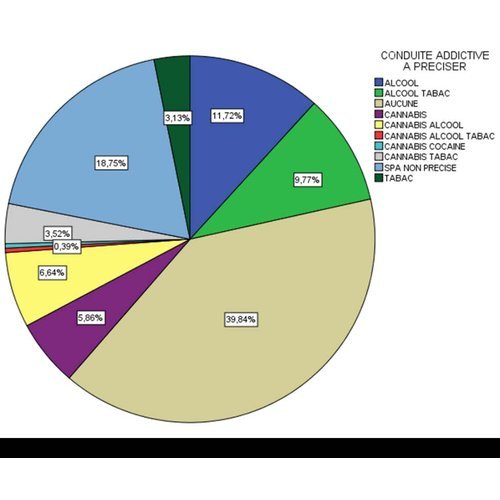
We conducted a cross-sectional study from January 1, 2015 to December 31, 2018. We designed and used a questionnaire to collect data. Results: 256 patients were collected with a mean age of 31.95 years and a standard deviation of 7.97. We noted that 87.5% of patients taken to psychiatry with police escort are male. 11.7% of these admitted patients had addictive behavior to alcohol alone. Frequent associations are 9.8% for alcohol-tobacco and 6.6% for alcohol cannabis. The addictive behaviors found in 74% concerned single patients. We found that 61.7% of patients with a history of mental disorder had addictive behavior. The study revealed that 82.5% of patients with psychomotor agitation have an associated addictive behavior. After the psychiatric interview, 77.3% of hospitalized patients had an addictive behavior among which 81.8% had an addiction. 95.7% of these hospitalized addict patients are in pre-contemplation after a motivational interview and did not notice any repercussions of their addiction on socio-professional life despite the relational difficulties reported by their loved one.
Conclusion:
Addictive behaviors are frequently found in patients admitted to psychiatric facilities under police escort. They remain a major issue in care because the motivation to change is weak. It is important to assess and integrate addictions in the management of psychiatric disorders with patients seen under police escort.
References
1. Shiels, M.S., Tatalovich, Z., Chen, Y., Haozous, E.A., Hartge, P., Nápoles A.M. et al. Trends in Mortality from Drug Poisonings, Suicide, and Alcohol-Induced Deaths in the United States from 2000 to 2017. JAMA Netw. Open 2020, 3.
2. Saunders KW, Von Korff M, Campbell CI, Banta-Green CJ, Sullivan MD, Merrill JO, et al. Concurrent use of alcohol and sedatives among persons prescribed chronic opioid therapy: prevalence and risk factors. J Pain. 2012;13(3):266–75.
3. Koski A, Ojanperä I, Vuori E. Interaction of alcohol and drugs in fatal poisonings. Hum Exp Toxicol. 2003;22(5):281–87.
4. Belete H, Mekonen T, Espinosa DC et all Cannabis use in sub-Saharan Africa: A systematic review and meta-analysis. Addiction. 2023 Jul;118(7):1201-15.
5. Vigna-Taglianti F, Mehanović E, Alesina M, et all Nigeria Coordination Group. Effects of the "Unplugged" school-based substance use prevention program in Nigeria: A cluster randomized controlled trial. Drug Alcohol Depend. 2021 Nov 1;228:108966. doi: 10.1016/j.drugalcdep.2021.108966.
6. Association burkinabé de santé publique Enquête sur le tabac chez les adolescents en milieu scolaire d’Ouagadougou et de BoboDioulasso au Burkina Faso : GYTS Mars 2003.24 P.
7. Soto C, West AE, Ramos GG et all. Substance and Behavioral Addictions among American Indian and Alaska Native Populations. Int J Environ Res Public Health. 2022 Mar 3;19 (5):2974. doi: 10.3390/ijerph19052974.
8. Kiedrowski, L.; Selya, A. Patterns of Polysubstance Use among Non-Hispanic White and American Indian/Alaska Native Adolescents: An Exploratory Analysis. Prev. Chronic Dis. 2019, 16, 180108.
9. Lucet C, Olié JP. Conduites addictives : faits cliniques. Bulletin de l'Académie Nationale de Médecine. 2020 Jun 1;204(6):551-60.
10. Institut National de la Statistique et de la Démographie Burkina Faso : Projections démographiques de 2007 à 2020. Aout 2009. 69 P.
11. Institut National de la Statistique et de la Démographie Burkina Faso : Annuaire statistique 2015. 398 P.
12. Ministère de la santé Burkina Faso : annuaire statistique 2017. Avril 2018 .386 P.
13. Baler, R. D., & Volkow, N. D. (2006). Drug addiction: The neurobiology of disrupted self-control. Trends in Molecular Medicine, 12(12), 559–66.
14. Parmar, A.; Kaloiya, G. Comorbidity of Personality Disorder among Substance Use Disorder Patients: A Narrative Review. Indian J. Psychol. Med. 2018, 40, 517P.
15. Michael A.P., Chandni H. , Sebastian F. G., Matthew B. W., Rachel L., Katherine P. et all The neuropsychopharmacology of cannabis: A review of human imaging studies Pharmacology and Therapeutics Vol 15 , March 2019, 132-61
16. Peter F. Omoluabi; A review of the incidence of nonprescription psychoactive substance use/misuse in Nigeria; International Journal of the Addictions; 1995 ;30(4) :445-58.
17. Jude U. Ohaeri, Olabisi A. Odejide; Admissions for drug and alcohol-related problems in Nigerian psychiatric care facilities in one year Drug Alcohol Depend ;1993 Jan;31(2):101-9.
Metrics
Downloads

This work is licensed under a Creative Commons Attribution 4.0 International License.
Copyright (c) 2026 O Moussa D Ousseyni, M Teguera, A Traore, K Karfo, D Douma Maiga